Best Value
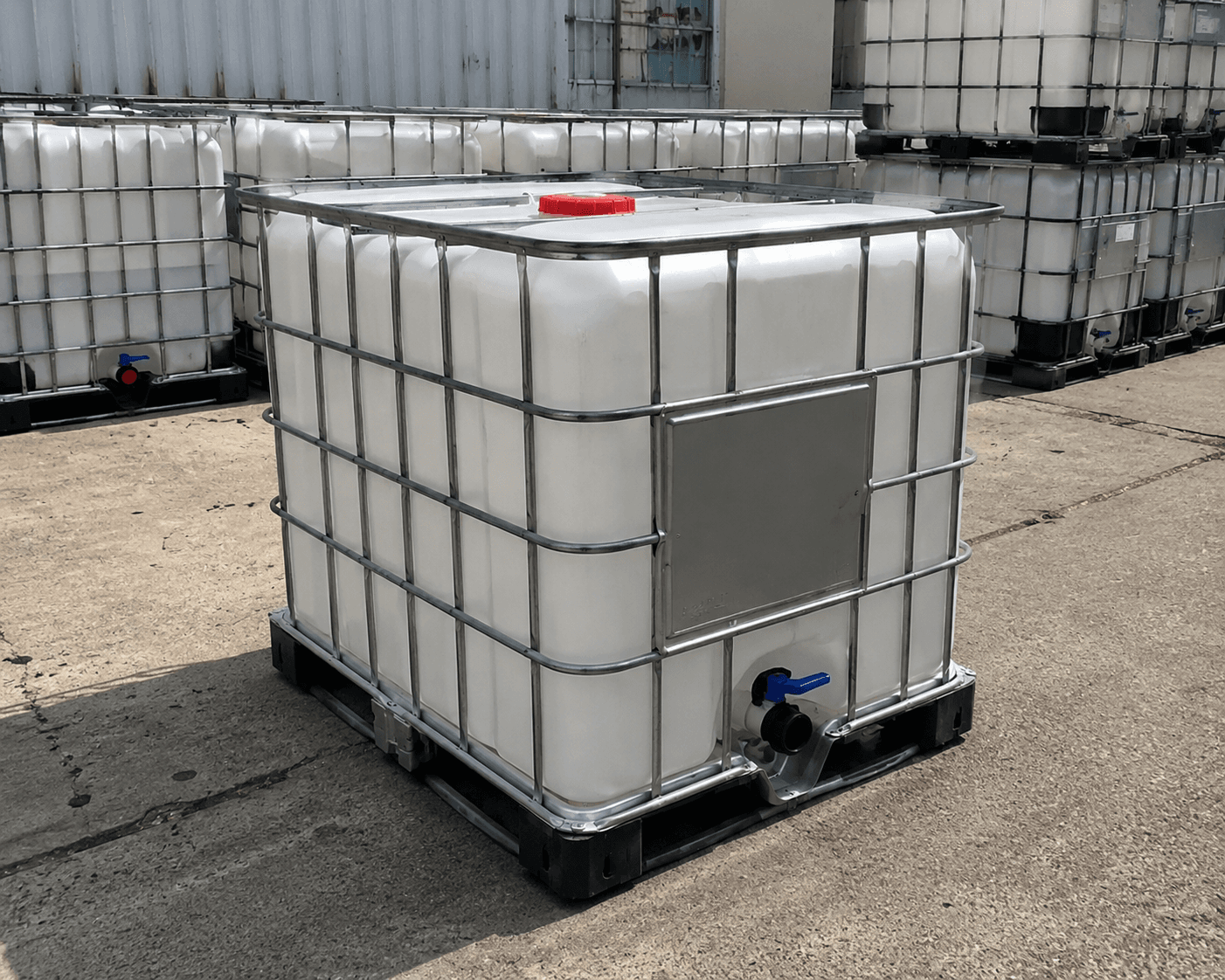
Reconditioned IBC Totes
Professionally cleaned, inspected, and certified IBC totes that deliver like-new performance at a fraction of the cost. Every reconditioned unit meets strict quality standards before leaving our Grand Rapids facility.
The Process
What Does Reconditioning Mean?
IBC reconditioning is a controlled, multi-step process that restores a used intermediate bulk container to a condition suitable for reuse. Unlike simply rinsing out a tote and reselling it, professional reconditioning involves thorough structural evaluation, industrial-grade cleaning, component replacement where necessary, pressure testing, and final certification.
At Grand Rapids IBC, every tote that enters our reconditioning line at 902 Scribner Ave NW goes through the same rigorous protocol regardless of its intended end use. The result is a container you can trust for performance, cleanliness, and structural integrity -- at 60-80% less than the cost of a brand-new unit.
Our process complies with industry best practices and follows guidelines established by the Reusable Industrial Packaging Association (RIPA). For food-grade reconditioning, we adhere to FDA 21 CFR standards and maintain full traceability documentation for every container.
By the Numbers
What our reconditioning program achieves annually
12,500+
IBCs Reconditioned
60-80%
Cost Savings vs. New
687 tons
Plastic Diverted from Landfill
875 tons
CO2 Emissions Avoided
Step by Step
Our 10-Step Reconditioning Process
Every IBC tote follows this exact sequence through our facility. No shortcuts, no exceptions. Each step has documented quality checkpoints.
Intake & Documentation
Each incoming IBC is cataloged with its previous contents, manufacturer, production date, and UN marking. We photograph each unit and create a digital record that follows it through the entire reconditioning line. This traceability documentation is maintained for a minimum of 3 years and is available to customers upon request.
Sorting & Segregation
Totes are sorted by prior use category -- food-grade containers are separated from industrial and chemical units to prevent cross-contamination. Food-grade totes are processed on a dedicated line that never handles non-food containers. Chemical containers are further sorted by prior contents to ensure compatible cleaning protocols are applied.
Structural Inspection
Trained technicians inspect the HDPE bottle for cracks, warping, UV degradation, and wall-thickness loss using calibrated thickness gauges. The steel cage is checked for weld integrity, bent members, and corrosion. The pallet is inspected for structural failure, split boards, and broken runners. Components that fail inspection are replaced or the unit is routed for recycling.
Residual Removal & Draining
Remaining product residue is fully drained and captured for proper disposal or recycling. Solidified residues are broken down mechanically. Hazardous residues are handled according to EPA waste handling protocols. The drain valve is opened and the tote is inverted on a drainage rack for a minimum of 15 minutes to ensure complete evacuation of all liquid contents.
Pre-Wash & Label Removal
The exterior cage and bottle are pre-washed with high-pressure hot water at 140-180 degrees F to remove surface dirt, dust, and cobwebs. All labels, stickers, and adhesive residues are removed from both the bottle and cage using scrapers and solvent-based adhesive removers. This step also breaks down organic residues and prepares the bottle interior for the main cleaning cycle.
Triple-Rinse Cleaning
The industry-standard triple-rinse protocol uses a three-stage sequence: (1) alkaline wash at 160 degrees F with FDA-approved detergent to break down organic and oil-based residues, (2) acid neutralization rinse to remove mineral deposits and neutralize alkaline residue, and (3) final sanitizing rinse with potable water to leave the bottle clean, neutral-pH, and ready for reuse. For food-grade totes, we use FDA 21 CFR 178.1010 approved cleaning agents exclusively. All rinse water is recirculated through multi-stage filtration systems to minimize water waste.
Interior Inspection & Odor Check
After cleaning, a technician performs a visual inspection of the bottle interior using a bright LED light to check for remaining stains, residues, or discoloration. An odor check is conducted to ensure no residual scent from previous contents remains. Totes that fail the odor check are re-washed or downgraded. Food-grade totes must pass both visual and olfactory inspection to receive food-grade certification.
Component Replacement
All worn or damaged parts are replaced with new, manufacturer-compatible components. This includes: gaskets (cap and valve), discharge valves (if the existing valve is damaged, stuck, or leaking), fill caps (replaced if cracked or with damaged threads), dust caps, and tamper-evident seals. Cage components and pallet boards are repaired or replaced as needed. Every reconditioned IBC leaves with a functioning discharge valve and a secure, properly sealing fill cap.
Pressure Testing & Leak Verification
Each tote undergoes a hydrostatic or pneumatic pressure test to verify bottle integrity. For hydrostatic testing, the bottle is filled with water and pressurized to 0.2 bar (2.9 psi) for 10 minutes while technicians inspect for leaks at all seams, valve connections, and the fill cap. Pneumatic testing uses compressed air at 0.2 bar with the bottle submerged to detect bubble-indicating leaks. Any unit that shows leakage at any point is removed from the line and routed for recycling.
Final Grading, Labeling & Certification
A dedicated QC inspector -- independent of the reconditioning line -- performs a final assessment and assigns a grade: A (like new), B (good condition), or C (fair/utility). The grade is based on cosmetic appearance only, since all units have already passed structural and pressure tests. Each tote receives a reconditioning certification label with the date, facility ID, grade, and unique serial number. The unit is then photographed, wrapped, and staged in the shipping area.
Quality Assurance
Quality Control Checkpoints
Quality control is not a single step at the end of our process -- it is integrated throughout every stage. Here are the specific QC checkpoints embedded in our reconditioning workflow.
Intake Rejection Gate
IBCs with visible cracks, structural deformation, or incompatible prior contents (e.g., pesticides for food-grade lines) are rejected before entering the reconditioning line. Approximately 8-12% of incoming units are rejected at this stage.
Wall Thickness Measurement
Calibrated ultrasonic thickness gauges measure HDPE bottle wall thickness at 6 points. Bottles with wall thickness below 1.8 mm at any measurement point are rejected. Average wall thickness loss of more than 30% from original spec disqualifies the unit.
Cage Weld Integrity
Every weld point on the cage is visually inspected and tested with a rubber mallet tap test. Cracked welds, separated joints, or significantly corroded welds fail the unit. Cage members with more than 15-degree deformation are straightened or replaced.
Cleanliness Verification
Post-wash interior is inspected with an LED flashlight for visual cleanliness and absence of staining. For food-grade units, ATP swab testing verifies biological cleanliness with a pass threshold of less than 100 RLU (Relative Light Units).
Pressure Hold Test
0.2 bar (2.9 psi) sustained for 10 minutes with zero pressure drop. Any detectable leak results in immediate rejection. This test catches microscopic cracks and seal failures that visual inspection cannot detect.
Final Independent QC
A QC inspector who did not work on the reconditioning line performs a final 15-point checklist covering bottle condition, cage integrity, valve function, cap seal, label removal, pallet condition, and overall appearance. This independence ensures objectivity in grading.
Before & After
Reconditioning Transformation
The difference between a used IBC arriving at our facility and the reconditioned unit that leaves is dramatic. Here is what changes during the process.
Bottle Interior
Product residue, staining, potential biofilm, residual odor from previous contents
Spotlessly clean, odor-free, sanitized interior ready for immediate use
Bottle Exterior
Dirty, stained, covered with old labels and adhesive residue, scuffed from handling
Clean, labels removed, scuffing minimized (varies by grade), presentable appearance
Steel Cage
Surface rust, dirt buildup, bent members from forklift impacts, old zip ties and tags
Cleaned, straightened where possible, all debris removed, structural integrity verified
Discharge Valve
Sticky or seized operation, worn gaskets, potential dripping, product buildup in mechanism
New or fully serviced valve with fresh gaskets, smooth operation, zero leaks
Fill Cap & Gasket
Cracked or cross-threaded cap, compressed gasket with poor seal, contamination risk
New gasket, serviced or replaced cap, verified leak-free seal under pressure
Base Pallet
Broken boards, split runners, protruding nails, unstable footing
Repaired or replaced boards and runners, stable and safe for forklift handling and stacking
Transparent Grading
Quality Grades Explained
After reconditioning, each IBC receives a quality grade based on cosmetic appearance and overall condition. All grades are fully functional and leak-tested.
Like New
- Bottle is clear or white with no yellowing
- No staining, odor, or residue
- Cage is straight with full galvanization
- All labels removed cleanly
- New valve and gaskets installed
Best for: food-grade, customer-facing, resale
Grade A totes are single-use or lightly-used containers that emerge from reconditioning looking virtually indistinguishable from a new unit. These are typically sourced from food and beverage operations where the product was clean, non-staining, and non-corrosive. Approximately 15-20% of our reconditioned inventory achieves Grade A status.
Good Condition
- Light scuffing or minor discoloration
- Minor label residue may remain
- Cage structurally sound, light surface rust
- Fully functional valve and cap
- Pressure tested and leak-free
Best for: industrial storage, manufacturing, non-customer-facing
Grade B represents the best value-to-performance ratio and accounts for the largest share of our reconditioned inventory -- approximately 50-60% of all units we process. These totes show signs of their prior life but are functionally identical to Grade A units. The price difference versus Grade A can be 15-25%.
Fair / Utility
- Noticeable discoloration or yellowing
- Heavier scuffing or cosmetic blemishes
- Minor cage dents, still structurally sound
- Cleaned and functional
- Lowest price point available
Best for: rainwater collection, agriculture, non-critical storage
Grade C totes offer the absolute lowest price point for a functional, cleaned, and leak-tested IBC. These units typically have multiple use cycles behind them and show their history in their appearance. They account for approximately 20-30% of our reconditioned inventory and are extremely popular with agricultural buyers, homesteaders, and non-critical storage applications.
Cost Transparency
Where Does the Savings Come From?
A new 275-gallon IBC tote typically costs between $250-$450 depending on configuration. A reconditioned unit from Grand Rapids IBC costs a fraction of that. Here is why the savings are so dramatic -- and why it does not come at the expense of quality.
The largest cost component of a new IBC is the raw materials: approximately 55 lbs of virgin HDPE resin for the bottle, steel tubing and zinc for the cage, and wood or composite for the pallet. In reconditioning, these materials are already paid for -- our cost is limited to labor, cleaning chemicals, replacement parts, and quality testing. This inherent cost structure advantage is passed directly to our customers.
The reconditioning labor cost per unit is approximately 30-45 minutes of technician time across all stations. Cleaning chemicals and water account for a small fraction. The largest variable cost is component replacement -- some units need only a gasket, while others require a new valve, cap, or pallet boards. This variability is why we grade each unit individually and price accordingly.
Approximate Cost Breakdown
What goes into the price of a reconditioned IBC
Sourcing / acquisition of used IBC
Purchase price of the incoming used container
Labor (inspection, cleaning, assembly)
Technician time across all 10 reconditioning steps
Replacement parts (valve, gaskets, cap)
New components installed during reconditioning
Cleaning chemicals & water
Detergents, acids, sanitizers, and water treatment
Quality testing & certification
Pressure testing, QC inspection, documentation
Facility overhead
Rent, equipment, insurance, utilities at our Grand Rapids facility
Smart Savings
Benefits of Reconditioned vs. Buying New
Dramatic Cost Reduction
Reconditioned IBCs typically cost 60-80% less than their brand-new equivalents. For operations using dozens or hundreds of totes, the savings add up to thousands of dollars per quarter.
Same Functional Performance
A properly reconditioned IBC holds the same volume, withstands the same stacking loads, and dispenses product identically to a new container. The difference is purely cosmetic.
Faster Availability
New IBC manufacturing can involve lead times of 4-8 weeks. Our reconditioned inventory is stocked and ready for immediate pickup or delivery from our Grand Rapids warehouse.
Proven Track Record
A reconditioned IBC has already survived its first use cycle, proving its structural integrity. Our inspection process then verifies it is fit for additional service.
Environmental Impact
The Green Case for Reconditioned IBCs
Choosing reconditioned containers is one of the most impactful sustainability decisions a business can make in its supply chain. Here is what the numbers look like for a single reconditioned IBC tote:
Multiply these savings across hundreds of containers and the environmental benefit becomes substantial. Our customers collectively prevent over 680 tons of plastic waste annually.
The Full Environmental Picture
Environmental Savings: The Detailed Math
We believe in transparency. Here is exactly how we calculate the environmental impact of choosing reconditioned over new for your IBC purchases.
| Environmental Metric | New IBC (per unit) | Reconditioned IBC (per unit) | Savings (per unit) |
|---|---|---|---|
| Virgin HDPE consumed | 55 lbs (25 kg) | 0 lbs (reuse) | 55 lbs (25 kg) |
| Steel consumed | 33 lbs (15 kg) | 2-4 lbs (repairs only) | ~30 lbs (13.5 kg) |
| CO2 from HDPE production | 57.5 kg (2.3 kg CO2 per kg HDPE) | 0 kg | 57.5 kg |
| CO2 from steel production | 12.5 kg (0.83 kg CO2 per kg steel) | ~1.7 kg | ~10.8 kg |
| Total CO2 emissions | ~70 kg | ~5-8 kg (cleaning + transport) | ~62-65 kg |
| Energy consumption | ~340 kWh | ~25-35 kWh | ~305-315 kWh |
| Water consumption | ~1,200 gallons (production) | ~50-75 gallons (cleaning) | ~1,125-1,150 gallons |
| Landfill waste avoided | 0 lbs (new production) | ~90 lbs of material diverted | 90 lbs per unit |
Scaled Impact Examples
10 Reconditioned IBCs
- 550 lbs of plastic saved
- 650 kg CO2 avoided
- 11,500 gallons of water saved
Equivalent to taking 1 car off the road for 2 months
100 Reconditioned IBCs
- 5,500 lbs (2.75 tons) of plastic saved
- 6,500 kg (7.2 tons) CO2 avoided
- 115,000 gallons of water saved
Equivalent to planting 105 trees
1,000 Reconditioned IBCs
- 55,000 lbs (27.5 tons) of plastic saved
- 65,000 kg (71.7 tons) CO2 avoided
- 1,150,000 gallons of water saved
Equivalent to powering 8 homes for a year
Volume Pricing
Bulk Order Discounts for Reconditioned IBCs
The more you buy, the more you save. Our tiered volume pricing rewards customers who purchase in bulk, with additional savings stacking on top of the already significant discount versus buying new. These discounts apply to all grades and are calculated per order.
For customers with predictable, recurring IBC needs, we offer annual purchase agreements that lock in pricing for 12 months and guarantee inventory allocation. This eliminates the risk of price fluctuations and ensures you always have containers available when you need them.
Contact our sales team for exact pricing based on your specific grade requirements, volume, and delivery schedule. We are transparent about our pricing and happy to provide written quotes for budget planning.
Reconditioned IBC Volume Tiers
| Quantity | Discount | Delivery |
|---|---|---|
| 1-4 units | Standard price | Pickup or local delivery |
| 5-9 units | 5% off | Free local delivery (25 mi) |
| 10-24 units | 10% off | Free delivery (50 mi radius) |
| 25-49 units | 15% off | Free delivery (100 mi radius) |
| 50-99 units | 20% off | Freight arranged at cost |
| 100+ units (truckload) | 25-30% off | Best freight rates |
| Annual agreement | Custom pricing | Scheduled deliveries |
* Discounts are off standard list price for the selected grade. Exact pricing provided upon request. Delivery radius measured from our Grand Rapids, MI facility.
Our Guarantee
Reconditioning Warranty & Terms
Every reconditioned IBC from Grand Rapids IBC comes with our reconditioning guarantee. We stand behind our work and our product quality.
Leak-Free Guarantee
Every reconditioned IBC is pressure tested before sale. If a unit leaks within 30 days of delivery due to a reconditioning defect, we will replace it at no charge or issue a full refund.
Structural Integrity
The cage and pallet are guaranteed to support rated stacking loads (2-high when full) for a minimum of 12 months from date of purchase. Damage from mishandling, forklift impacts, or overloading is excluded.
Grade Accuracy
The grade assigned to your IBC accurately reflects its cosmetic condition at the time of shipment. If you receive a unit graded lower than what you ordered, contact us within 7 days for a swap or adjustment.
Food-Grade Certification
Food-grade reconditioned IBCs are documented with prior-contents traceability and cleaning certification. If documentation is incomplete or inaccurate, we will replace the unit.
Component Warranty
Replacement parts installed during reconditioning (valves, gaskets, caps) are warranted for 90 days against manufacturing defects. Normal wear from use is excluded.
Returns Policy
Unused reconditioned IBCs may be returned within 14 days of delivery for a full refund minus a 15% restocking fee. Units must be in the same condition as received. Delivery charges are non-refundable.
What Our Customers Say
Customer Testimonials
“We switched from buying new IBCs to reconditioned Grade B from Grand Rapids IBC two years ago. The quality is outstanding -- our production team cannot tell the difference. We have saved over $40,000 annually on container costs alone.”
Operations Manager
Mid-Michigan Food Processing
“The grading system is honest and accurate. When they say Grade A, it really does look like new. We use Grade A food-grade totes for our juice concentrates and have never had a quality issue.”
Purchasing Director
West Michigan Beverage Co.
“Grade C totes are perfect for our farm. We use them for rainwater collection, fertilizer mixing, and livestock watering. At the price Grand Rapids IBC charges, we replaced our entire water storage system for less than the cost of two new totes.”
Farm Owner
Kent County Agriculture
“What impressed me most was the documentation. Every reconditioned tote came with a certificate showing the reconditioning date, grade, and prior-contents classification. Our FDA auditors were completely satisfied.”
Quality Assurance Manager
Great Lakes Ingredients
“We order 50-100 reconditioned totes quarterly. The volume pricing is competitive, delivery is always on time, and the team is responsive when we have questions. Highly recommend for any industrial operation looking to reduce packaging costs.”
Supply Chain Manager
Midwest Chemical Distribution
Ready to Save with Reconditioned IBCs?
Contact our team for current inventory, pricing, and volume discounts on reconditioned IBC totes. We offer pickup and delivery across the Midwest.